

A tenant reports a persistent musty odor. An employee notices discolored ceiling tiles after a roof leak. Maintenance discovers moisture behind a wall several weeks after a plumbing repair.
Each situation creates more than a building-maintenance problem. Mold and unresolved moisture can expose a commercial property to employee complaints, tenant disputes, damaged inventory, business interruption, insurance complications, and expensive remediation work.
Commercial mold liability risk often depends on what property leadership knew, when they learned about the condition, and how they responded. Delayed investigation, poor communication, incomplete records, and improper cleanup can increase the physical damage and make future disputes harder to manage.
Property owners, facility managers, asset managers, and employers should have a clear process for responding to water and mold concerns. That process should prioritize occupant safety, moisture control, professional assessment, documentation, and communication.
What Is Commercial Mold Liability Risk?
Commercial mold liability risk refers to the potential financial, operational, contractual, regulatory, or legal exposure associated with mold and moisture conditions in a business property.
The parties involved may include:
- Building owners
- Commercial landlords
- Tenants
- Employers
- Property management companies
- Facility managers
- Maintenance vendors
- General contractors
- Insurance carriers
- Employees and building occupants
Responsibility can depend on several factors, including the source of the moisture, the language in the lease, maintenance obligations, previous complaints, notice provided to the responsible party, and the steps taken after the problem was discovered.
For example, a landlord may be responsible for maintaining the roof and exterior building envelope, while a tenant may be responsible for plumbing or HVAC equipment installed as part of a tenant improvement. Every commercial lease is different, which makes a careful review of the agreement essential before assigning responsibility.
There are currently no federal EPA standards or threshold limits for airborne concentrations of mold or mold spores. The absence of a federal numerical limit means commercial mold decisions often rely on visual findings, moisture measurements, building conditions, professional judgment, remediation protocols, and project documentation.
OSHA also does not maintain a specific permissible exposure limit for mold. Employers still have broader responsibilities under the Occupational Safety and Health Act to provide a workplace free from recognized serious hazards and to address known moisture and mold concerns appropriately.
How Mold Creates Liability for Commercial Properties
Mold can affect a commercial property through several overlapping forms of exposure.
Employee Health and Workplace-Safety Complaints
A workplace mold concern may begin with visible discoloration, a musty odor, recurring water stains, or employee questions about indoor air quality.
OSHA identifies potential mold-exposure symptoms such as nasal stuffiness, eye irritation, wheezing, and allergic responses. Individual reactions vary, and property managers should avoid making medical conclusions about specific occupants. Health concerns should be directed to qualified healthcare professionals.
When an employee reports a concern, management should:
- Record the complaint and location
- Inspect the reported area promptly
- Look for visible water damage and moisture sources
- Determine whether access should be restricted
- Notify facility, safety, human resources, and risk-management personnel
- Contact qualified professionals when the condition exceeds internal capabilities
- Preserve all related communications and work orders
Ignoring or dismissing a complaint without investigation can create additional risk. Even when visible mold is absent, recurring odors or moisture may justify a closer inspection for hidden conditions.
Tenant Claims and Lease Disputes
Mold disputes between landlords and commercial tenants often center on responsibility, notice, access, and response time.
Important questions may include:
- What caused the moisture?
- Who was responsible for maintaining the affected system?
- When did each party first learn about the condition?
- Was written notice provided?
- Did the tenant allow access for inspection and repairs?
- Did either party delay corrective action?
- Did tenant operations contribute to indoor humidity or moisture?
- Does the lease contain indemnification or insurance requirements?
A tenant may argue that building management failed to repair a roof or plumbing problem. A landlord may contend that the tenant failed to report the leak promptly or created excessive moisture through its operations.
Property managers should review the lease and involve legal counsel before making statements about fault, payment responsibility, or liability.
Customer, Patient, Resident, and Visitor Concerns
The potential consequences can be more complicated in buildings serving large numbers of people or sensitive populations.
Examples include:
- Healthcare facilities
- Senior living communities
- Schools and childcare facilities
- Hotels and resorts
- Multifamily properties
- Fitness centers
- Retail environments
- Restaurants
- Public buildings
The EPA recommends making occupant and worker safety a primary concern during commercial mold remediation. Depending on the affected area, reported concerns, and disruption caused by the work, a remediation plan may need to include temporary relocation or work during periods when fewer occupants are present.
Commercial restoration work may therefore require phased containment, after-hours scheduling, controlled access, separate work routes, and ongoing communication with building occupants.
Property Damage and Business Interruption
Mold and moisture can affect numerous materials within a commercial building, including:
- Drywall
- Ceiling tiles
- Insulation
- Carpet and flooring
- Wood framing
- Cabinets
- Furniture
- Paper records
- Inventory
- HVAC components
Porous materials can be particularly difficult to restore after significant mold growth. Depending on the material and extent of contamination, removal and replacement may be necessary. The EPA provides different cleanup guidance based on the material, size of the affected area, water source, and level of contamination.
The direct remediation cost may represent only part of the loss. A business may also experience closed rooms, relocated employees, canceled reservations, delayed production, inaccessible inventory, lost rent, or interrupted customer service.
Conditions That Increase Commercial Mold Risk
Certain building conditions and management failures can significantly increase commercial mold liability risk.
Delayed Water-Damage Response
Mold problems frequently begin with an unresolved water event.
Common sources include:
- Broken plumbing lines
- Roof leaks
- Sprinkler-system activations
- Sewage backups
- Storm intrusion
- Appliance failures
- HVAC condensation
- Drainage problems
- Overflowing fixtures
The EPA recommends cleaning and drying wet or damp materials within approximately 24 to 48 hours when possible. This timeframe serves as general guidance, since mold growth does not occur on an identical schedule in every situation. Temperature, humidity, material type, contamination level, and airflow can affect what happens after a water loss.
A property team should respond immediately rather than waiting to see whether visible mold develops. Moisture can remain inside walls, beneath flooring, above ceilings, and within insulation after exposed surfaces appear dry.
Recurring Moisture Problems
Repeated repairs can create a documented history showing that the property had an ongoing moisture issue.
Examples include:
- Repeated ceiling staining
- Multiple roof patches
- Recurring HVAC drain backups
- Condensation on pipes or exterior walls
- Plumbing leaks in the same area
- Water entering around windows
- Persistent humidity problems
Property managers should maintain centralized records of leak reports, vendor invoices, moisture readings, photographs, roof inspections, HVAC service, and occupant complaints.
A collection of disconnected work orders may prevent leadership from recognizing a pattern. Centralized reporting makes it easier to identify recurring locations and escalate unresolved building problems.
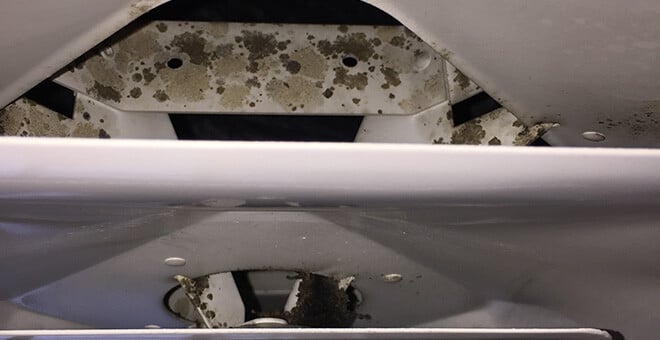
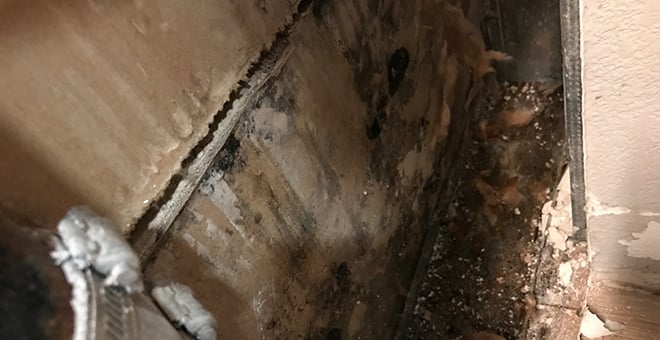
Hidden Mold
Mold can develop in spaces that remain out of view during routine inspections.
Common locations include:
- Behind wall coverings
- Inside wall cavities
- Under carpet or flooring
- Above suspended ceilings
- Behind cabinets
- Inside mechanical rooms
- Around HVAC equipment
- Beneath roof assemblies
- Behind stored products
Investigating hidden mold requires care. Disturbing affected materials can release dust and spores into occupied areas. The EPA advises considering an experienced professional when hidden mold is suspected, especially when the investigation requires opening walls or disturbing potentially contaminated materials.
What to Do After Discovering Mold in a Commercial Building
A clear response protocol can help reduce damage, protect occupants, and create a reliable record of the actions taken.
Control the Moisture Source
The first operational priority is to stop or control the source of water.
This could require:
- Shutting off a plumbing line
- Repairing a roof opening
- Clearing a blocked condensate drain
- Stopping groundwater intrusion
- Correcting exterior drainage
- Stabilizing indoor humidity
- Addressing irrigation near the building
- Repairing windows or exterior walls
Mold remediation cannot provide a lasting solution while the moisture source remains active. The EPA identifies moisture control as the foundation of mold prevention and remediation.
Emergency stabilization and permanent repairs may occur at different stages. Document both steps and track the source through final completion.
Restrict Access to the Area
Management should determine whether employees, tenants, customers, or visitors need to be redirected away from the affected location.
Initial controls may include:
- Closing individual rooms
- Blocking hallways
- Posting temporary notices
- Relocating workstations
- Moving inventory
- Coordinating with security
- Shutting down affected HVAC zones when appropriate
Untrained employees should not remove mold-affected drywall, ceiling tiles, insulation, or flooring. Demolition without appropriate containment and protective equipment can spread contamination into unaffected spaces.
Notify the Right People
Every commercial property should have a written escalation list.
Depending on the building, notifications may include:
- Property ownership
- Asset management
- Property management leadership
- Facility management
- Tenant representatives
- Human resources
- Workplace safety personnel
- Insurance carriers or brokers
- Legal counsel
- Commercial restoration professionals
Designate one person to coordinate updates and respond to occupant questions. Consistent communication reduces confusion and prevents conflicting statements.
Property representatives should avoid making medical promises, guaranteeing that an area is safe, or accepting responsibility before the appropriate assessments are complete.
Develop a Written Remediation Plan
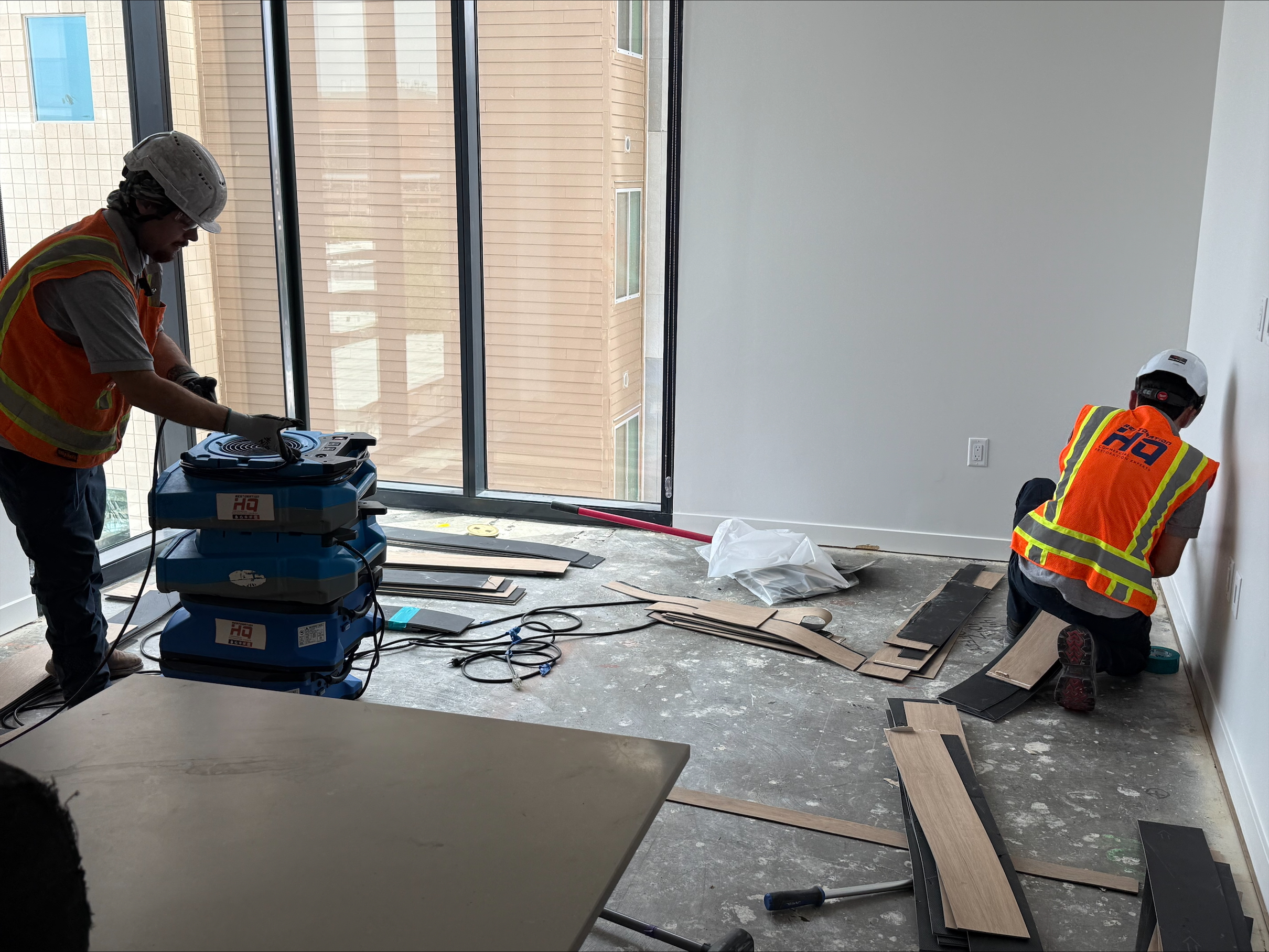
The scope of work should reflect the size, materials, occupancy, water source, and complexity of the project.
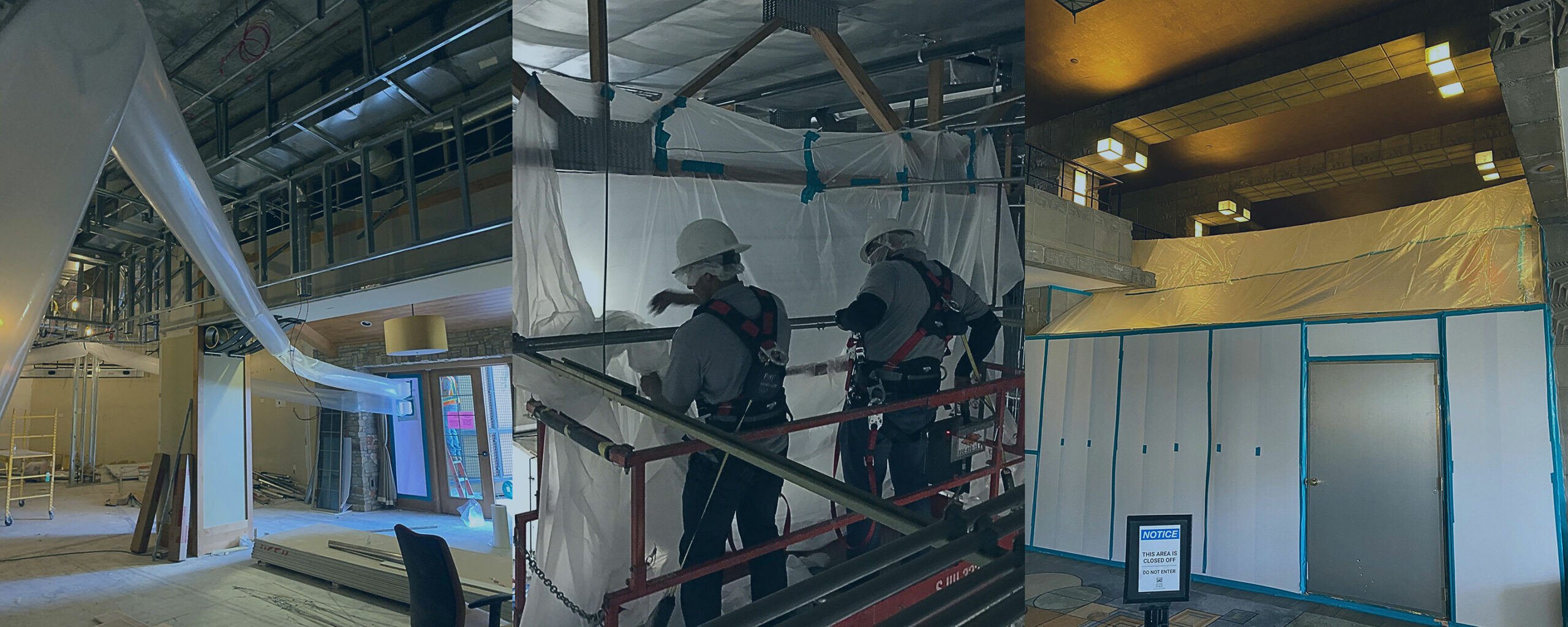
A commercial mold remediation plan may address:
- The source of moisture
- The affected rooms and materials
- Access restrictions
- Containment methods
- Negative-air requirements
- Personal protective equipment
- HEPA air filtration
- Material removal
- Cleaning procedures
- Waste-removal routes
- Equipment placement
- Work schedules
- Post-remediation evaluation
- Reconstruction
EPA guidance recommends selecting a remediation manager for medium or large projects and planning how occupants, workers, and unaffected building areas will be protected. The plan may need to change when hidden damage or additional contamination is discovered.
Coordinate Work Around Business Operations
Commercial mold remediation often takes place inside active businesses.
The restoration contractor may need to coordinate:
- Night and weekend work
- Separate entrances for crews
- Controlled material-removal routes
- Noise limitations
- Dust and odor controls
- Protection of sensitive equipment
- Phased closures
- Temporary barriers
- Tenant schedules
- Infection-control requirements
For example, remediation in an office may occur one suite at a time. A hotel may remove several rooms from service while keeping other floors operational. A healthcare facility may require more stringent containment and infection-control coordination.
Documentation That Can Reduce Commercial Mold Risk
Documentation helps property leadership show what was discovered, when the response began, and how the condition was handled.
Record the Initial Discovery
The initial report should include:
- Date and time
- Name of the person reporting the condition
- Exact location
- Visible damage
- Reported odors
- Known or suspected water source
- Photographs and video
- Actions taken immediately
- Areas closed or restricted
Preserve original emails, text messages, work orders, inspection reports, and maintenance requests.
Avoid editing photographs or combining files in ways that remove timestamps or source information.
Maintain a Complete Timeline
The project record should document:
- When the condition was reported
- When maintenance arrived
- When the moisture source was controlled
- When the insurer was contacted
- When the restoration contractor was called
- When containment was installed
- When demolition or cleaning began
- When drying goals were reached
- When post-remediation evaluation occurred
- When reconstruction was completed
- When the area reopened
A reliable timeline can demonstrate that the property team responded promptly and followed an organized process.
Keep Objective Project Records
Useful remediation records may include:
- Moisture maps
- Moisture-meter readings
- Daily drying logs
- Equipment records
- Containment photographs
- Material-removal logs
- Waste documentation
- Change orders
- Communication logs
- Third-party reports
- Reconstruction records
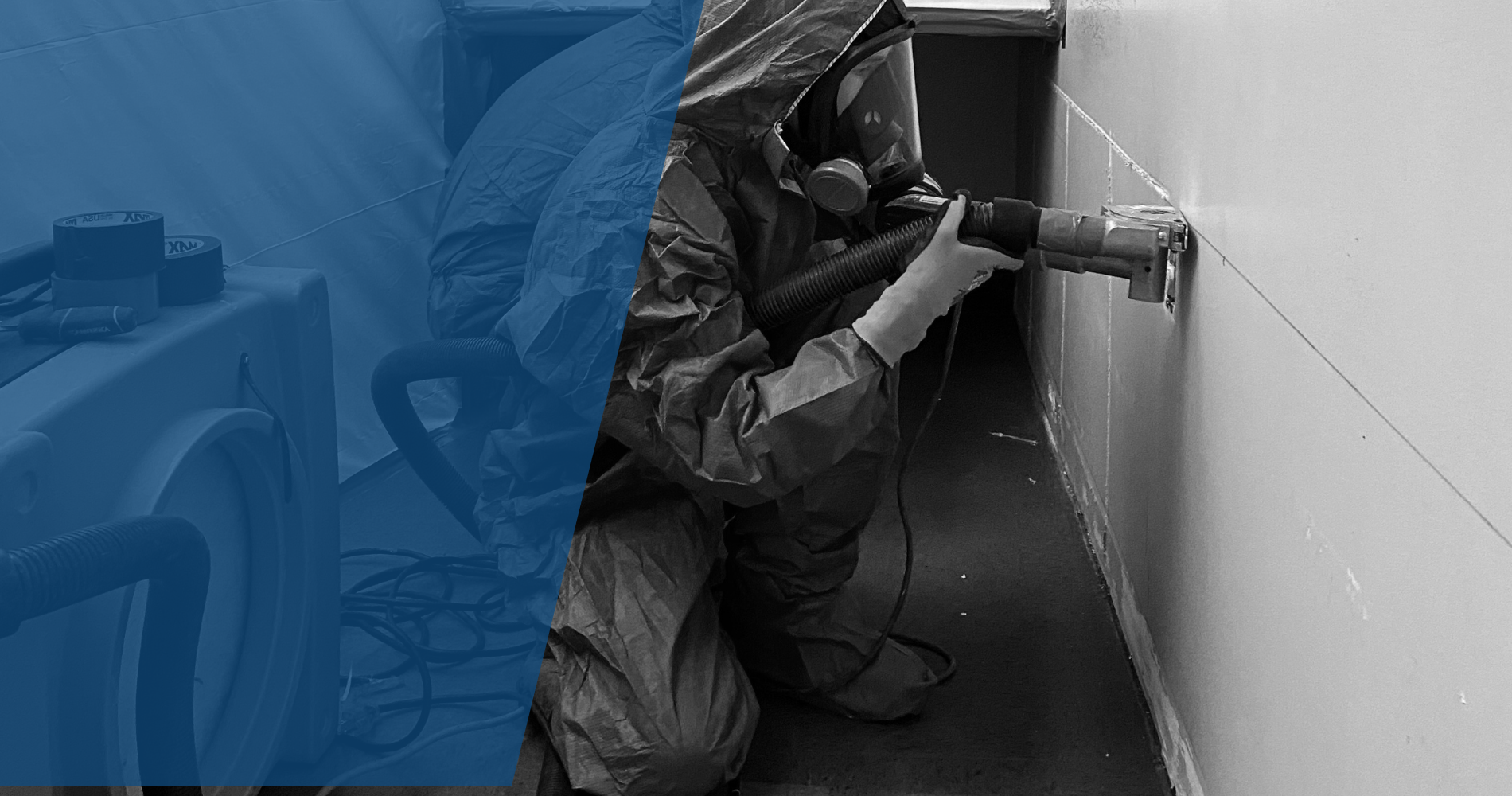
Restoration HQ’s mold-remediation process includes inspection, negative-pressure containment, HEPA air filtration, documented removal procedures, restoration, and independent third-party Certified Industrial Hygienist testing when required by the project. The use of an independent hygienist can help separate remediation work from final verification.
Records should be retained according to company policies, lease requirements, insurance guidance, and advice from legal counsel.
Is Commercial Mold Testing Always Necessary?
Testing can be useful in some situations, but it is not automatically required whenever visible mold appears.
The EPA states that sampling is generally unnecessary when visible mold growth is already present. Because no federal airborne mold limits have been established, a sample cannot determine whether a building complies with a federal mold exposure standard.
Testing or professional environmental assessment may be appropriate when:
- Mold is suspected but cannot be located
- Occupants report concerns without visible growth
- The HVAC system may be involved
- The affected building is large or complex
- The condition is disputed
- The property serves a sensitive population
- Insurance or legal counsel requests testing
- Post-remediation verification is part of the project
Sampling should be designed and interpreted by professionals with relevant experience. A test result without context may create confusion and may provide limited information about the source or extent of the moisture problem.
Independent post-remediation verification can help confirm that the agreed scope has been completed and that acceptance criteria established for the project have been met.
How to Prevent Commercial Mold Claims
Preventive maintenance and a rapid water-response plan can reduce the frequency and severity of commercial mold incidents.
Create a Moisture-Response Plan
The plan should identify:
- Emergency reporting procedures
- Water shutoff locations
- After-hours contacts
- Approved restoration vendors
- Area-isolation procedures
- Insurance notification requirements
- Documentation standards
- Communication responsibilities
Employees and tenants should know how to report a leak at any time of day.
Inspect High-Risk Building Areas
Regular inspections should cover:
- Roofs and drainage systems
- Plumbing lines and fixtures
- HVAC condensate pans and drains
- Mechanical rooms
- Windows and exterior walls
- Kitchens and restrooms
- Below-grade areas
- Irrigation near foundations
- Areas with previous water damage
EPA prevention guidance recommends fixing leaks promptly, keeping HVAC drip pans clean and unobstructed, conducting scheduled building and HVAC inspections, and maintaining indoor relative humidity below 60% when possible.
Train Employees and Maintenance Teams
Staff should learn to recognize early warning signs, including:
- Water stains
- Bubbling paint
- Warped flooring
- Wet ceiling tiles
- Condensation
- Musty odors
- Damp insulation
- Recurring HVAC leaks
They should also understand when a condition requires immediate escalation rather than a routine maintenance request.
Establish an Emergency Restoration Partner
Choosing a restoration company before an emergency helps reduce delays during a water or mold event.
Preplanning may include:
- Reviewing insurance and certifications
- Establishing building-access procedures
- Identifying emergency contacts
- Reviewing sensitive areas
- Discussing documentation standards
- Confirming billing procedures
- Sharing floor plans and shutoff locations
Restoration HQ specializes in commercial property restoration and provides 24/7 emergency response in the Phoenix and Tucson areas. Its services include commercial water damage restoration, mold remediation, fire and smoke restoration, biohazard cleanup, asbestos services, and reconstruction.
Common Commercial Mold Liability Scenarios
Office Roof Leak
A storm damages a roof on Friday evening. Water enters several offices and saturates ceiling tiles, insulation, carpet, and drywall.
Waiting until Monday morning can allow moisture to spread and increase the amount of material requiring removal. The recommended response includes emergency roof stabilization, extraction, moisture mapping, removal of unsalvageable porous materials, drying, documentation, and communication with affected employees.
Multi-Tenant Property Complaint
A tenant reports a musty odor near a shared wall. The source could involve common plumbing, the roof, HVAC equipment, or conditions inside a neighboring suite.
Property management should coordinate one controlled investigation. Allowing multiple contractors to open walls independently can spread contamination and create conflicting documentation.
The lease, maintenance records, and inspection findings will help determine responsibility.
Healthcare Plumbing Loss
A plumbing leak occurs near a patient-care area.
Management may need to coordinate immediate containment, infection-control precautions, temporary relocation, after-hours work, and independent verification. The remediation team must protect patients, employees, medical equipment, and adjacent treatment areas.
Warehouse Moisture Behind Inventory
Water intrusion develops along an exterior warehouse wall behind stacked products. The condition remains hidden until employees notice an odor.
The response may require isolating inventory, inspecting product damage, identifying the moisture source, documenting affected materials, creating a controlled work area, and coordinating remediation around shipping operations.
How to Choose a Commercial Mold Remediation Company
Commercial mold remediation requires more than general cleaning.
Ask prospective contractors:
- Do you specialize in commercial facilities?
- Is emergency response available 24/7?
- Who will prepare and manage the scope?
- What containment methods will be used?
- Will negative pressure and HEPA filtration be required?
- How will unaffected areas and occupants be protected?
- How will daily work be documented?
- Can you coordinate with insurers and property stakeholders?
- Is independent verification available?
- Can you complete repairs and reconstruction?
Warning signs include a contractor offering no written scope, failing to address the moisture source, providing vague documentation, recommending unnecessary testing, or making absolute promises about eliminating every mold spore.
A qualified contractor should explain the process, limitations, containment plan, documentation, and conditions required before the space can return to normal use.
Get 24/7 Commercial Mold Remediation Support From Restoration HQ
Commercial mold liability risk grows when moisture is ignored, complaints go undocumented, or cleanup begins without a clear plan. Property owners and facility managers should respond immediately to water and mold reports, control the moisture source, restrict affected areas, involve qualified professionals, and maintain a complete record of every decision.
Restoration HQ provides commercial mold inspection, containment, removal, restoration, and reconstruction services throughout Phoenix, Tucson, and surrounding Arizona communities.
Its commercial mold-remediation process includes HEPA air filtration, negative-pressure containment, certified technicians, detailed documentation, and independent third-party testing when appropriate.
For immediate commercial mold or water-damage assistance, contact Restoration HQ.
Frequently Asked Questions About Commercial Mold Liability
Can a commercial property owner be held liable for mold?
Potential liability depends on the moisture source, applicable law, lease language, prior notice, maintenance obligations, insurance coverage, and the response taken after discovery. Specific claims should be reviewed by qualified legal counsel.
How quickly should a business respond to water damage?
Response should begin immediately. EPA guidance recommends cleaning and drying wet materials within approximately 24 to 48 hours when possible to reduce the potential for mold growth.
Does OSHA have a specific mold exposure limit?
OSHA does not have a specific permissible exposure limit for airborne mold. Employers remain responsible for addressing recognized workplace hazards and controlling moisture sources.
Does the EPA regulate indoor mold levels?
The EPA has not established federal standards or threshold limits for airborne mold concentrations.
Is mold testing always necessary?
Testing is generally unnecessary when visible mold growth is present. It may be useful for hidden conditions, complex properties, disputed claims, sensitive occupancies, or post-remediation verification.
Should maintenance employees remove mold themselves?
Untrained employees should not disturb affected materials. The project size, building occupancy, affected materials, water source, and potential exposure should determine whether qualified remediation professionals are needed.
Who pays for mold remediation in a leased property?
Payment responsibility may depend on the lease, moisture source, insurance coverage, maintenance obligations, and the parties' conduct. Review the lease and consult legal and insurance professionals before assigning financial responsibility.
Can a business remain open during remediation?
Some businesses can continue operating in unaffected areas when the project uses appropriate containment, access controls, scheduling, and communication. Larger or more complex conditions may require temporary closure or relocation.
